Defining the btc blood money strategy
The term "blood money" typically conjures images of illicit finance or dirty cash. In the context of this guide, we are stripping away the criminal connotation to focus on the financial mechanics. Here, it serves as a metaphor for high-stakes capital deployment in volatile markets. It describes the aggressive allocation of resources into Bitcoin infrastructure where the potential for significant loss is matched only by the possibility of outsized returns.
This strategy is not about laundering or hiding assets. It is about recognizing that building resilient Web3 infrastructure requires capital that is willing to endure extreme volatility. The "blood" in this metaphor represents the sweat, risk, and liquidity that flows into the ecosystem to support nodes, validators, and development. It is the price of admission for those who believe in the long-term viability of decentralized systems.
By framing the discussion this way, we distinguish our approach from traditional, conservative investment models. This is not passive holding; it is active participation in the infrastructure layer. The goal is to build or support systems that can withstand market shocks, ensuring that the network remains robust even when prices fluctuate wildly.
Understanding this distinction is critical for anyone looking to engage with the Bitcoin ecosystem at a deeper level. It shifts the focus from short-term price speculation to long-term infrastructure resilience. The BTC Blood Money guide is about building something that lasts, not just trading something that moves.
How the network holds up under pressure
When the market crashes, the first thing people worry about is whether the Bitcoin network will keep running. In the context of a BTC Blood Money guide, understanding infrastructure resilience is about more than just price charts; it’s about verifying that the underlying rails remain open when liquidity dries up. Uptime isn’t a marketing promise here—it is a mathematical guarantee enforced by the protocol itself.
The most visible metric of this resilience is the hash rate. Even when miners are forced to sell assets to cover operational costs, the network difficulty adjusts to ensure blocks continue to be produced roughly every ten minutes. This self-correcting mechanism means that a drop in mining revenue doesn’t immediately translate to network failure. Instead, it triggers a consolidation phase where less efficient hardware is replaced by more robust operations, often strengthening the network's long-term security posture.
Decentralization plays a critical role in this stress test. Unlike centralized financial systems that can freeze accounts or halt processing during extreme volatility, Bitcoin’s distributed ledger relies on thousands of independent nodes. These nodes validate transactions based on consensus rules, not on the whims of a central authority. This structure ensures that as long as a majority of nodes remain online, the network continues to function regardless of external economic shocks.
Security is further reinforced by the economic incentives built into the protocol. High transaction fees during periods of congestion act as a natural filter, prioritizing high-value transfers while keeping the base layer operational. This fee market mechanism ensures that the network remains secure and functional even when speculative trading volume spikes or drops dramatically.
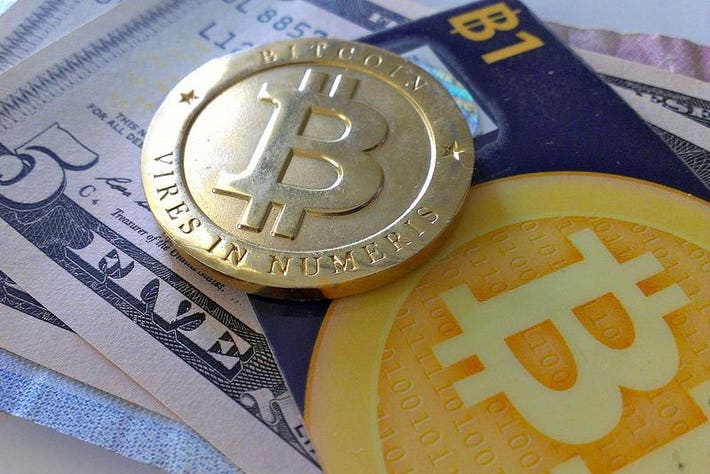
Market research for web3 strategy
You can’t build a resilient Web3 infrastructure on gut feelings. The market moves too fast, and the stakes are too high. Effective market research in this space isn’t about reading blog posts; it’s about reading the chain and the room. You need two things: hard on-chain data to see where the money is moving, and sentiment analysis to understand why it’s moving there.
On-chain data: The ledger doesn’t lie
On-chain metrics provide the ground truth for network health. While price charts show you the past, on-chain data shows you the present. Look at active addresses to gauge actual usage, not just speculation. Check transaction volumes to see if the network is being used for real transfers or just internal shuffling.
Don’t just look at the numbers; look at the distribution. Are tokens concentrated in a few wallets, or are they spread out among thousands of users? Concentration is a risk. Distribution is resilience. Tools like Glassnode or Dune Analytics let you slice this data to see exactly how capital is flowing into your project or sector.
Sentiment analysis: Reading the room
Data tells you what happened; sentiment tells you what people think will happen next. In Web3, sentiment is driven by community engagement, developer activity, and broader crypto news cycles. You need to monitor social channels not just for hype, but for signal.
Track developer commits on GitHub. A surge in code activity often precedes a price surge. Monitor Discord and Telegram for genuine discussion versus bot noise. If developers are building and users are discussing, the foundation is solid. If the chat is just price predictions, the foundation is shaky. Combine this qualitative data with the quantitative on-chain metrics to get a full picture.
Contextualizing with live market data
Research is useless if it’s disconnected from current market conditions. You need to see how your project fits into the broader Bitcoin ecosystem. The BTC Blood Money guide emphasizes that understanding the primary asset’s movement is critical for any Web3 strategy built on top of it.
Comparing infrastructure models
Choosing the right infrastructure for your Web3 operations comes down to understanding the trade-offs between speed, cost, and decentralization. In a "BTC Blood Money guide" context, where transaction integrity and finality are paramount, selecting the wrong layer can mean the difference between a smooth exit and a frozen asset.
The core decision usually lies between Layer 1 (L1) networks and Layer 2 (L2) scaling solutions, or between centralized exchanges (CEX) and decentralized exchanges (DEX). L1s like Bitcoin or Ethereum offer maximum security but often suffer from high fees and slower throughput during peak times. L2s, built on top of L1s, process transactions off-chain and settle them on-chain, offering significantly lower costs and faster speeds while inheriting the base layer's security.
| Feature | Layer 1 (L1) | Layer 2 (L2) | Centralized Exchange (CEX) | Decentralized Exchange (DEX) |
|---|---|---|---|---|
| Security | Highest (Base Layer) | High (Inherits L1) | Medium (Platform Risk) | High (Smart Contract Risk) |
| Speed | Slow (Minutes/Hours) | Fast (Seconds) | Instant | Fast (Block-dependent) |
| Cost | High | Low | Variable (Fees) | Low (Gas + Protocol) |
| Control | Self-Custody | Self-Custody | Platform Custody | Self-Custody |
For high-stakes moves, many operators use a hybrid approach. They might hold long-term reserves on L1 for security, use L2s for frequent operational transactions to minimize fees, and rely on CEXs for immediate liquidity when needed. Understanding these distinctions is critical for managing risk in the Web3 space.
Execute the btc blood money plan
This section outlines the operational checklist for the BTC Blood Money strategy. The approach treats infrastructure resilience like a high-stakes mission: precision, preparation, and strict risk controls are non-negotiable. Below is the step-by-step protocol for deployment.
Before deploying capital, audit your node setup and wallet security. Ensure you are running a fully synced node or using a reputable, audited RPC endpoint. Weak infrastructure is the single point of failure in this strategy.
Define your max drawdown tolerance and position sizing. The BTC Blood Money guide emphasizes capital preservation over aggressive leverage. Set hard stops that align with your risk profile, not your emotional tolerance.

Enter positions only when technical indicators align with your thesis. Use limit orders to avoid slippage during volatile spikes. Do not chase price action; let the market come to your predefined entry zones.

Continuously track on-chain metrics and macroeconomic data. Adjust your stop-losses as the trade moves in your favor. This strategy requires active management, not a "set and forget" approach.

Exit positions when targets are hit or the thesis breaks. Greed is the enemy of the BTC Blood Money plan. Take profits systematically and secure your gains. Do not hold for "moon" targets.
The BTC Blood Money guide is not a get-rich-quick scheme. It is a disciplined framework for navigating the crypto landscape with military precision. Follow the steps, respect the risk, and execute with confidence.
No comments yet. Be the first to share your thoughts!