Defining the btc blood money asset class
When you hear "blood money" in a traditional context, you might think of legal settlements or historical compensation. In the crypto world, the term has a sharper, more specific meaning. BTC blood money refers specifically to Bitcoin and other digital assets that originate from illicit activities—such as ransomware payments, sanctions evasion, or darknet marketplaces—and are now circulating in the broader market.
This guide focuses on tracking these specific flows. We are not discussing general market volatility or legitimate trading volume. Instead, we are looking at the forensic side: identifying when "dirty" coins enter the liquidity pool and how they move through exchanges and mixers. Understanding this distinction is critical because the presence of these funds can impact exchange delistings, regulatory scrutiny, and even the price stability of certain trading pairs.
The "asset class" is not a formal financial category like equities or bonds. It is a classification used by blockchain analytics firms and compliance officers to flag addresses and transactions linked to criminal behavior. By treating these funds as a distinct class, analysts can trace their movement, assess the risk they pose to financial institutions, and understand the broader infrastructure that supports illicit crypto commerce.
Mapping the infrastructure layer
Illicit funds rarely stay in one wallet. They move through a chain of services designed to obscure origin and destination. Understanding this infrastructure is the first step in any btc blood money guide for 2026. The money doesn't just disappear; it travels through mixers, bridges, and exchanges.
Mixing services and tumblers
Mixers pool funds from many users and redistribute them to new addresses. This breaks the direct link between the source and the recipient. Chain analysis firms track these patterns by clustering addresses that interact with known mixer contracts. While effective for small-scale obfuscation, sophisticated mixers now use cross-chain techniques to further complicate tracing.
Cross-chain bridges
Bridges allow assets to move between different blockchains. Illicit actors use them to jump from a tracked chain like Bitcoin to a less monitored one, or vice versa. Once funds cross the bridge, the on-chain history often resets. This creates a "blind spot" for analysts who rely on single-chain ledgers. Monitoring bridge contracts and their associated liquidity pools is essential for tracking these jumps.
Exchange deposits and withdrawals
The final destination is often a centralized exchange. Users deposit mixed or bridged funds to buy fiat or stablecoins. Exchanges are required to follow KYC/AML rules, but they often process thousands of transactions daily. Detecting illicit deposits requires correlating blockchain data with exchange compliance reports. When an exchange freezes an account linked to darknet markets or ransomware, it provides a critical data point for forensic teams.
Visualizing the flow
Tracking these flows requires more than just following a single transaction. It involves mapping the entire network of interactions. The technical chart below shows BTC price action, which often correlates with large illicit inflows or outflows from known entities.
Running on-chain forensic steps
Tracking illicit crypto flows requires moving beyond simple balance checks. You need to reconstruct the movement of funds through the blockchain to identify the source and destination of "blood money." This process involves tracing transactions back to their origin, identifying mixing services or tumblers, and linking wallet addresses to known illicit entities.
The following workflow provides a concrete, step-by-step approach to analyzing a specific transaction or wallet cluster associated with illicit activity. Use this guide to build a forensic case or verify the provenance of funds.
Start by entering the specific Bitcoin address or transaction hash into a block explorer like Blockchain.com or Blockchair. This gives you the initial snapshot of the wallet's balance, transaction history, and current status. Verify the address format to ensure it is a valid BTC address (starting with 1, 3, or bc1).
Click through each outgoing transaction from the target wallet to identify the immediate recipients. These "downstream" wallets are often the first layer in a laundering chain. Record these addresses and note the timing of the transfers. Rapid movement to multiple addresses shortly after receipt is a common indicator of layering.

Look for transactions that split large amounts into smaller, equal-sized outputs sent to numerous different addresses. This pattern is characteristic of mixing services or tumblers, which are designed to obfuscate the trail of funds. If you see connections to known mixers like ChipMixer or Wasabi Wallet, flag this as a high-risk indicator.

Use forensic tools like Chainalysis, Elliptic, or TRM Labs to check if any of the identified downstream wallets have been previously flagged. These platforms maintain databases of addresses associated with darknet markets, ransomware groups, and sanctioned entities. A match here significantly increases the likelihood of illicit origin.

Continue tracing the funds forward to their final resting place, such as a centralized exchange (CEX) or a cold storage wallet. Identify if the funds are being converted to fiat or other cryptocurrencies. This final step helps establish the ultimate beneficiary of the illicit activity and completes the forensic map.
How illicit flows reshape BTC technical patterns
When large-scale illicit liquidations hit the market, they don't just dump coins; they warp the technical landscape. In 2026, tracking these movements is less about guessing where the price will go and more about understanding where the liquidity has vanished. A sudden move from a known exchange wallet can trigger cascading stop-losses, turning a standard correction into a bloodbath that leaves long wicks on the charts.
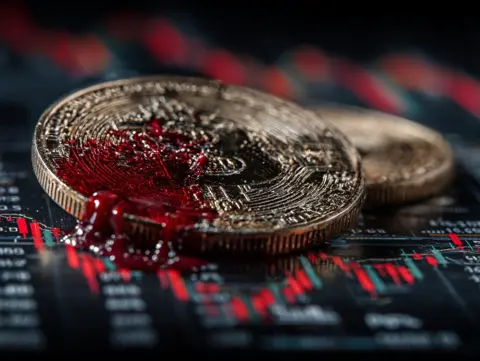
The chart below captures a moment where illicit pressure met technical resistance. The sharp drop reflects the immediate aftermath of a large-scale liquidation event, showing how quickly market structure can break when the underlying order book is thin.
To navigate this, you need to see the difference between organic trading and forced selling. The table below compares liquidity depth and node distribution between legitimate trading pairs and those heavily influenced by illicit flows. Notice how the "Illicit-Heavy" column shows significantly lower liquidity depth, making it easier for large sells to crash the price.
| Metric | Legitimate Pairs | Illicit-Heavy Pairs |
|---|---|---|
| Liquidity Depth | High (Deep Order Book) | Low (Thin Order Book) |
| Node Distribution | Wide (Global Exchanges) | Concentrated (Mixers/OTC) |
| Volatility Response | Moderate | Extreme (Slippage Spikes) |
| Recovery Time | Hours to Days | Weeks to Months |
No comments yet. Be the first to share your thoughts!