Defining the BTC Blood Money Framework
When traders use the term BTC Blood Money, they are rarely referring to a specific financial product, a new token, or an external book. Instead, it describes a distinct analytical lens used to identify moments of extreme liquidity stress and seller exhaustion in the Bitcoin market. This framework focuses on the infrastructure's resilience when capital flows are under severe duress, helping investors distinguish between temporary volatility and structural breaks.
The core of this analysis lies in observing how the network handles pressure. Unlike traditional assets that rely on centralized clearinghouses, Bitcoin’s decentralized nature means that liquidity crises manifest differently. We look for signs where sellers are forced to liquidate positions at any price, creating a vacuum that can lead to rapid, violent price discovery. This is not about predicting the next pump; it is about understanding the mechanics of fear and exhaustion.
By focusing on on-chain signals and order book depth, this approach provides a clearer picture of market health than standard technical indicators alone. It asks a simple question: when the blood hits the floor, does the infrastructure hold, or does it break? Understanding this dynamic is essential for navigating the high-stakes environment of modern crypto markets.
Tracking Liquidity and On-Chain Signals
The chart patterns on a screen are often just echoes of what’s happening behind the scenes. To find the real "blood" in the market, you need to look at where the liquidity is actually moving. This isn't about guessing the next candle; it's about watching the dry riverbeds where money is being drained before the crash.
The most telling signal is often the exchange balance. When Bitcoin moves off exchanges into cold storage, it’s generally a sign of long-term holding. But when balances spike, it means coins are sitting on the doorstep of the market, ready to be sold. This accumulation of sell-side liquidity is the fuel for any major downturn. You can track these flows to see if the "blood" is pooling at the top, waiting to spill over.
However, exchange data only tells half the story. You also need to watch the broader money supply. The global M2 money supply is the total amount of cash circulating in the economy. When central banks tighten liquidity or the money supply contracts, speculative assets like Bitcoin often feel the squeeze first. The market doesn't move in a vacuum; it moves with the tide of global fiat.
When you see exchange balances rising while the M2 money supply is flattening or dropping, you’re looking at a classic setup for a liquidity drain. The "blood" is being drawn out of the system, and the price follows the money. Ignoring these on-chain signals means you’re trading blind, watching the reflection in the mirror instead of the person standing in front of it.
2026 Infrastructure Resilience
Bitcoin’s price stability during high-stress periods isn’t magic; it’s the result of a hardened, distributed network that refuses to break. When markets panic, the difference between a temporary dip and a structural collapse often comes down to the health of the underlying infrastructure. We are looking at three core pillars: the security provided by hash rate, the censorship resistance of node distribution, and the liquidity buffering of layer-2 adoption.
In 2026, the narrative has shifted from mere survival to structural resilience. The network doesn’t just endure volatility; it uses it to reinforce its economic security. As institutional capital flows in, the demand for on-chain settlement and off-chain scaling creates a feedback loop that stabilizes the asset class over time.
To understand how this plays out, we need to look at the data. The following comparison highlights how key infrastructure metrics behave across different market cycles, showing that 2026’s infrastructure is fundamentally different from previous bear markets.
| Metric | 2022 Bear Market | 2026 Infrastructure | Stability Impact |
|---|---|---|---|
| Hash Rate | Dropped ~40% | Near all-time highs | Higher security floor |
| Node Distribution | Concentrated hubs | Global decentralization | Censorship resistance |
| Layer-2 Volume | Negligible | High throughput | Liquidity buffering |
| Active Addresses | Declining trend | Steady growth | Network utility |
The hash rate is the first line of defense. In 2022, a significant drop in hash rate signaled miner capitulation, which often preceded deeper price corrections. In 2026, the hash rate remains robust, anchored by efficient mining operations and long-term holding strategies. This creates a higher security floor, making it exponentially more expensive for any actor to attempt a 51% attack, thereby reassuring institutional investors.
Node distribution has also evolved. Early in Bitcoin’s history, nodes were concentrated in specific geographic regions, creating potential points of failure. Today, the network is truly global. This decentralization ensures that no single regulatory body or geographic event can shut down the network, providing a layer of political resilience that was absent in previous cycles.
Finally, layer-2 adoption has transformed liquidity dynamics. With high-throughput layer-2 solutions handling the bulk of daily transactions, the main chain is reserved for high-value settlement. This separation reduces congestion and fee volatility, allowing the network to absorb market shocks without clogging the payment rails. The result is a system that feels less like a speculative asset and more like critical global infrastructure.
Positioning for the infrastructure shift
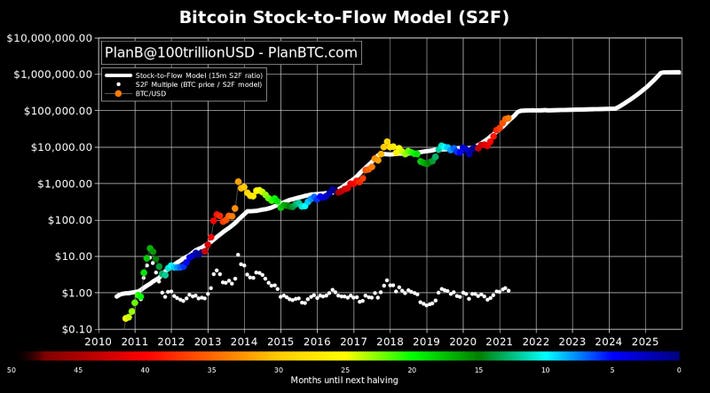
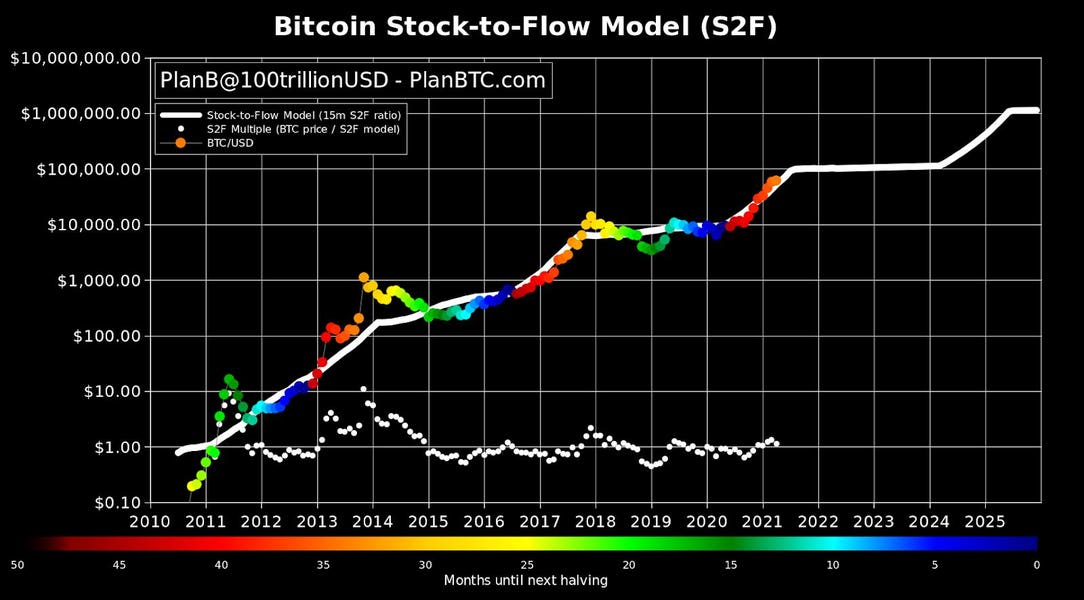
The current market environment is defined by what analysts call "blood money"—capital that has been flushed out of speculative positions and into a state of exhaustion. Samson Mow, CEO of JAN3, argues that Bitcoin’s price remains structurally undervalued, trading 24-66% below its long-term trend lines [src-serp-6]. This gap between price and structural value is where strategic positioning begins. You are not buying volatility; you are buying the inevitable reversion to a network that operates independently of traditional banking rails.
To navigate this, you must shift your focus from short-term price action to on-chain liquidity signals. The "blood" in the market represents seller exhaustion. When long-term holders stop selling and new money begins to accumulate on-chain, the infrastructure shift becomes visible. This is not about predicting the next daily candle; it is about recognizing when the supply shock is imminent.
Before making any moves, audit your liquid assets. In a high-stakes market shift, cash is optionality. Ensure you have enough dry powder to average down without forcing the sale of your long-term holdings. If your liquidity is tied up in volatile altcoins or leveraged positions, you are already exposed to the very risk this strategy aims to mitigate.
Look for signs of seller exhaustion. When long-term holders cease distributing and exchange balances begin to drop, it signals that supply is being locked away. This is the infrastructure shift in action. Use on-chain data to confirm that "blood money" is being absorbed by patient capital rather than flipping for quick profits.

Do not try to time the absolute bottom. Divide your intended allocation into three or four tranches. Buy the first tranche when you see initial signs of exhaustion, and add to your position as the market stabilizes. This approach removes emotional decision-making and ensures you are positioned for the long-term reversion to trend.
Once your positions are established, the hardest part begins: waiting. The infrastructure shift is not a daily event. It is a structural realignment that takes months or years. Avoid checking the price every hour. Let the network’s utility and scarcity do the work. Your job is now to hold, not to trade.
The goal of this positioning is not to get rich quick, but to survive the flush and benefit from the subsequent infrastructure shift. By focusing on liquidity, on-chain signals, and disciplined execution, you align yourself with the structural reality of Bitcoin rather than the noise of the daily market.
Frequently Asked Questions About BTC Analysis
What makes Bitcoin different from traditional money?
Bitcoin operates without a central authority. Unlike Venmo or PayPal, which require banks and government approval to move funds, Bitcoin allows anyone to send value to anyone else globally without intermediaries. This decentralization is the core of its infrastructure, ensuring that liquidity isn't controlled by a single entity or jurisdiction.
How do I interpret "blood money" signals in market data?
"Blood money" refers to capital that is flushed out during extreme volatility or forced liquidations. In BTC analysis, we track these signals using on-chain metrics to identify where leveraged positions are being wiped out. These moments often mark local bottoms, as the market clears out weak hands and excess leverage before stabilizing.
Why focus on on-chain signals instead of news?
News is often lagging or manipulated, but on-chain data is immutable. By looking at wallet movements, exchange inflows, and miner behavior, we see the actual flow of liquidity. This provides a clearer picture of market health than headlines, which frequently reflect sentiment rather than the underlying structural shifts in the network.
Is Bitcoin still a viable infrastructure play?
Yes, but the narrative has shifted from simple speculation to utility. The 2026 infrastructure shifts highlight Bitcoin's role as a settlement layer and store of value. Analyzing hash rate, node distribution, and institutional adoption helps determine if the network is strengthening or fragmenting under new regulatory and technical pressures.
No comments yet. Be the first to share your thoughts!